Free to try this season
Run the whole card
from one screen.
Sign-up, heat lineups, results, and season points — no clipboard, no spreadsheet, less time at the table. Built for tracks that race every week.

Sign-up, heat lineups, results, and season points — no clipboard, no spreadsheet, less time at the table. Built for tracks that race every week.
At the sign-up table, type the driver's name into RaceDay on your check-in device — or tap it if they've raced with you before — and pick their classes. Their heat pill draws automatically, usually in under 15 seconds. You're still collecting waivers and entry fees at the table — RaceDay just skips the handwritten roster.
Heats build themselves the moment sign-up closes: pill order, inside/outside lines, B-mains and features, all laid out and ready to post before the drivers' meeting.


Plug any TV into the wall. RaceDay fills the screen with rotating lineups — no crowding the tower to read a printout.
Tap the cars in the order they finish — or use the number pad, or import a CSV straight from your timing system. Standings, the B-main, and the feature lineup all build from those numbers automatically.
Season points update the instant a feature is scored. No Monday-morning spreadsheet, no re-adding a season by hand.


A driver book that remembers every racer year to year. Backups you can export anytime. A full audit trail of every result edit. Race-day history you can pull up months later.
Runs in a browser on whatever laptop or tablet you already own — nothing to install, nothing to configure on a server.

Tech, the pay window and the announcer's booth run off the same lineups and results as everyone else — no second system, no retyping.
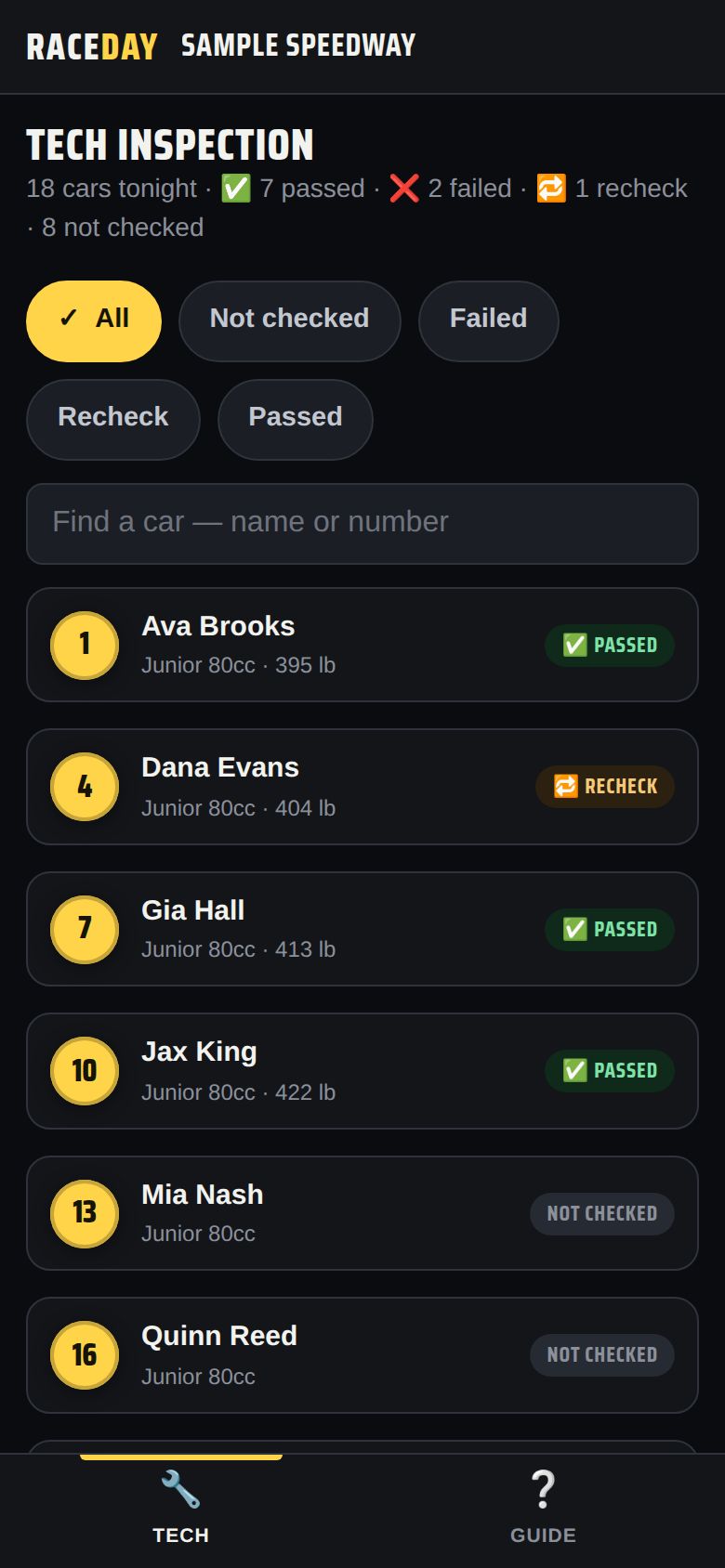
A checklist, weight and Pass / Fail / Recheck for every car. Run it on a tablet in tech; the tower sees results instantly.
Tech guide →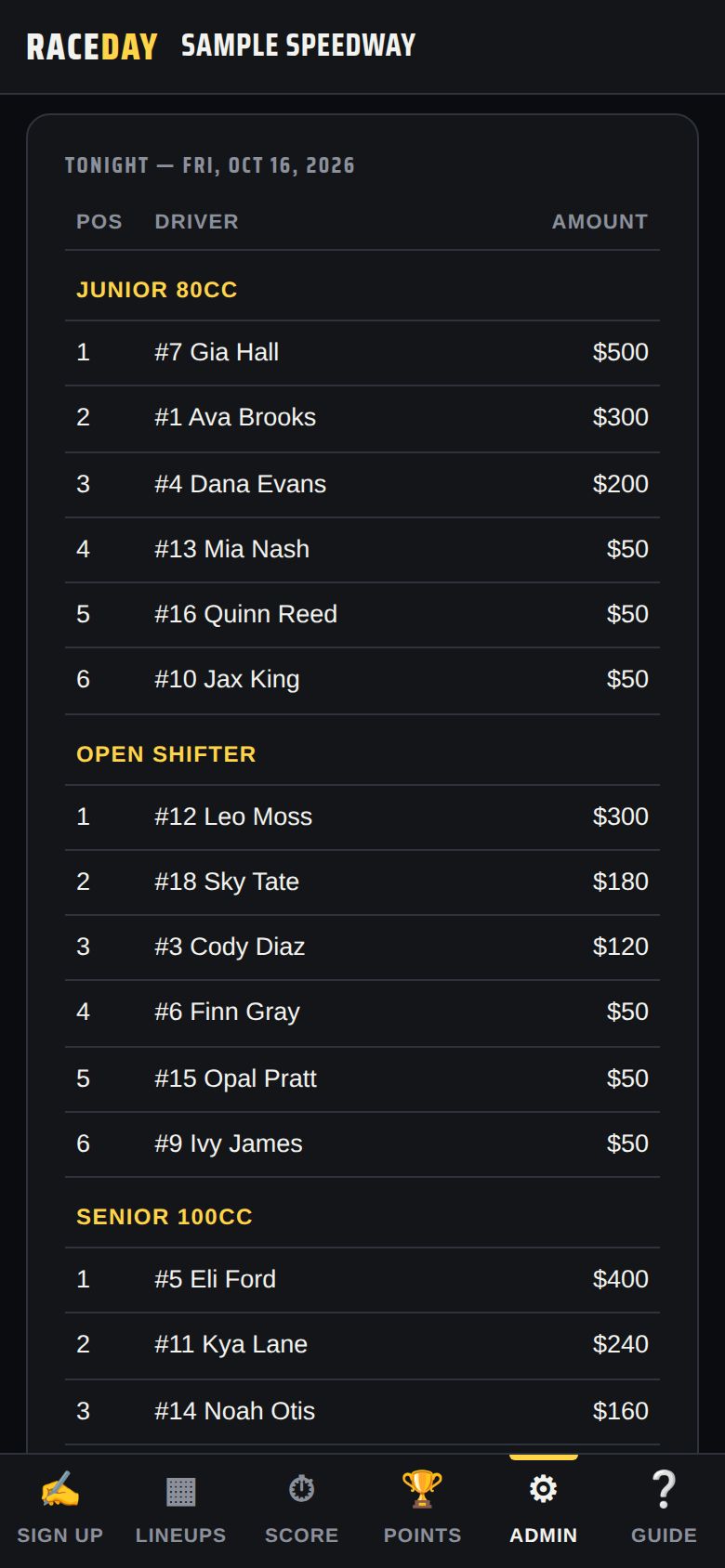
Set a purse per class and RaceDay works out who’s owed what — driver or car owner — then keeps a paid/unpaid ledger and season totals for 1099s.
Payouts guide →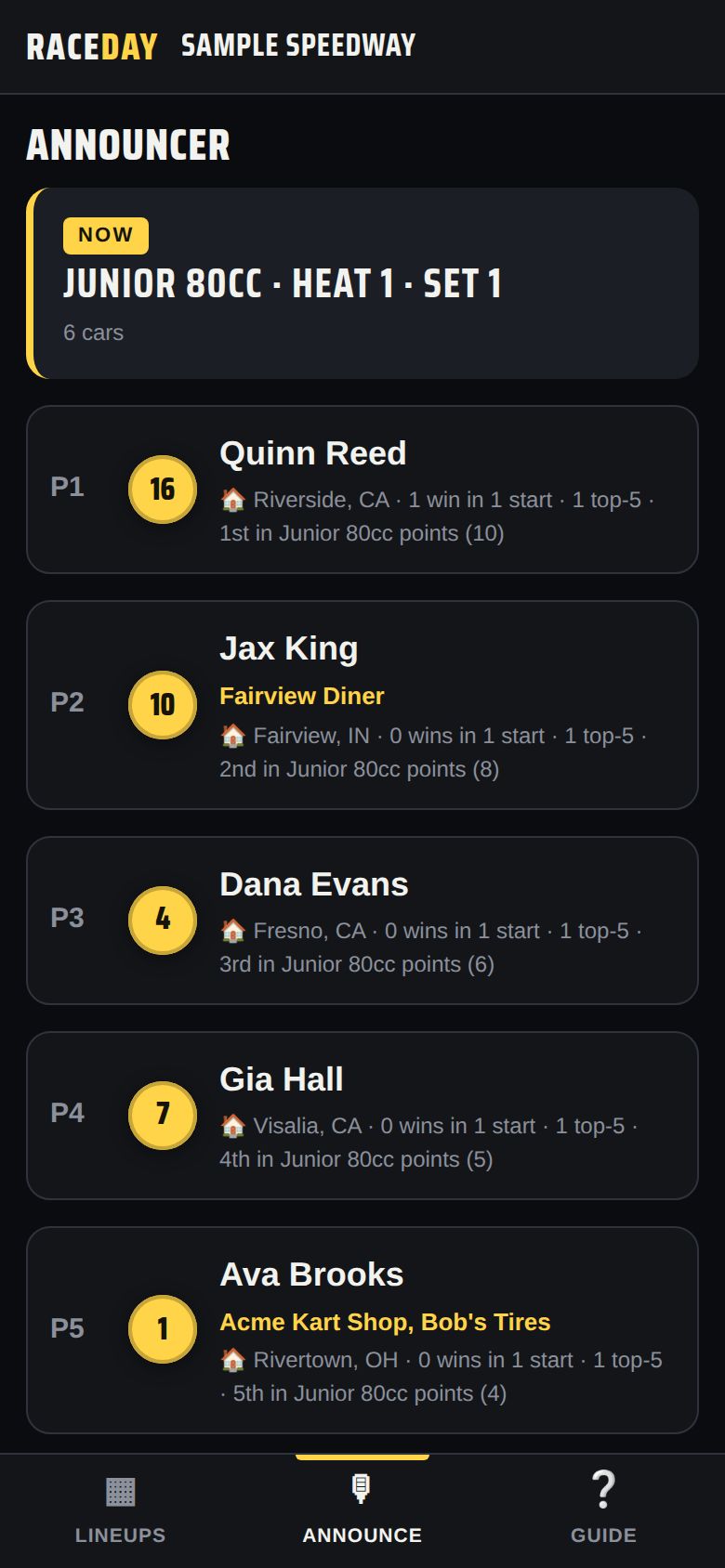
The race on track in starting order, with sponsors, hometown, career record and points rank for every driver. It follows the night by itself.
Announcer guide →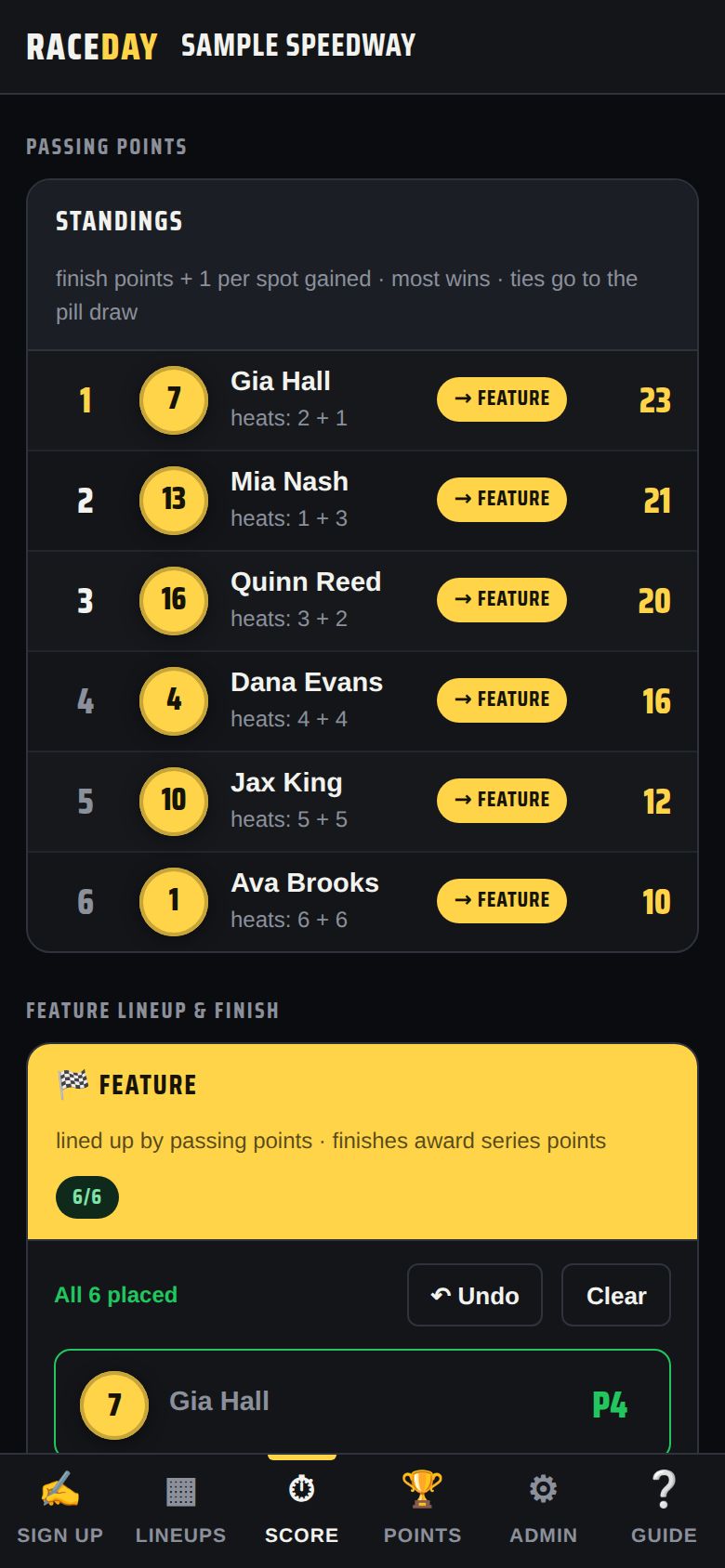
Score heats by finish plus spots gained, and give any class its own points table — the way your series actually runs.
Formats guide →The same free link fans already use for live lineups also opens up context most racing software skips entirely: tap a class to see what it's about, tap any driver's name mid-lineup for their stats, hometown, and sponsors.
Most of what's out there stops at a name and a lap time. RaceDay's built so a stranger in the stands — or on their couch, watching the same link — understands what they're looking at, not just who's ahead.
Drivers build a free Driven profile once — name, car number, photo, sponsors — and it follows them to every track running RaceDay. At sign-up they hand over a short link code instead of retyping everything, and the track sends their results straight back.
Every driver gets a public page to share with fans and sponsors — latest result, starts, wins, top 5s and average finish, with every result posted by the track's own scoring, never typed in. Pro ($3/mo or $30/yr) adds the full broadcast look: a header photo, three team colors, points standings, season form and milestone badges.

I built RaceDay because I wanted a race night to run off a laptop instead of a clipboard.
It's new this season, and you'd be one of the first tracks to run it. That means every class gets set up by hand with you, and I'm reachable on your first race night to make sure it runs smoothly. You're not a test case with a support queue; you get direct attention from the person who built it.
Free trial, no card, no pressure. If it earns its keep, we'll talk about a license that costs less than one night's gate.
Click in, poke around with the demo field already loaded, and see how it feels before you commit to anything.